
Türkiye Invests in Its Next Generation of Tech Talent: What It Could Mean for Investors
تحریر:Alireza·شائع ہوا:·7 منٹ کا مطالعہ
Türkiye is taking another important step toward strengthening its position in advanced technology by investing in the researchers who will shape the country's future innovation ecosystem.
On 20 August 2026, President Recep Tayyip Erdoğan announced the Strategic Technology Human Resources Program, which will initially train 550 PhD students across 20 research universities. Over the next five years, the initiative aims to bring approximately 3,000 young researchers into Türkiye's science and technology ecosystem.
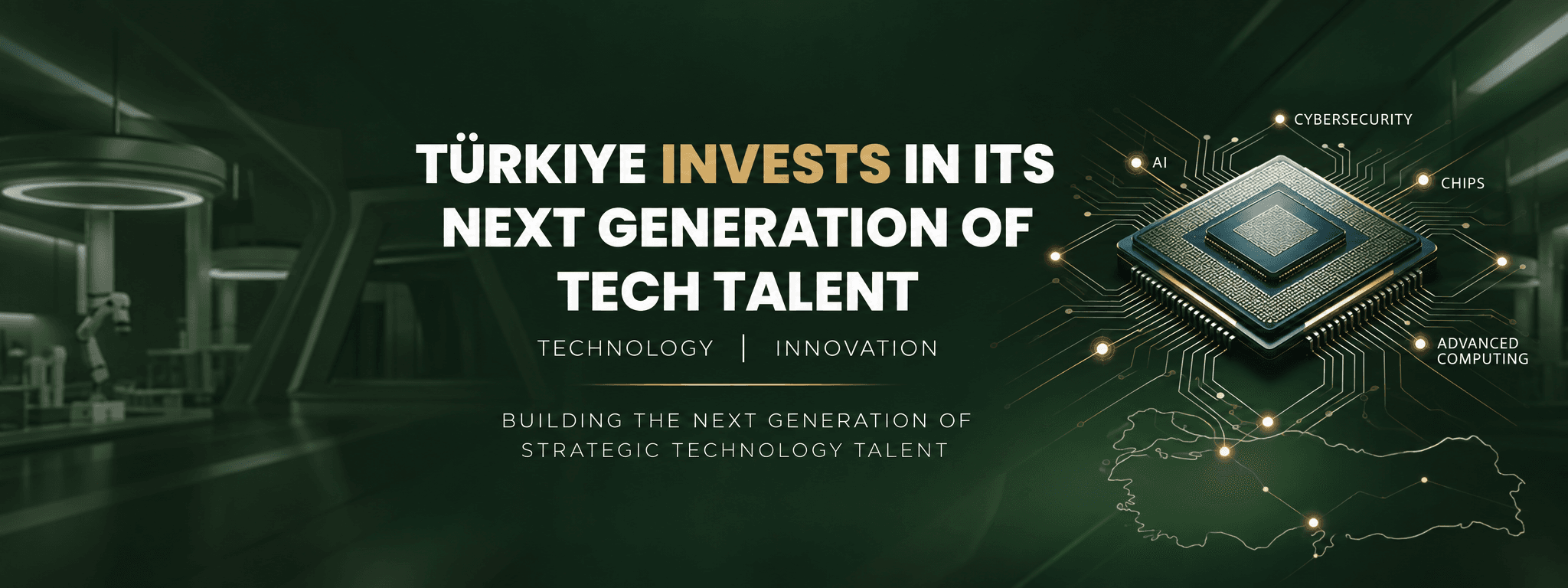
The program will focus on strategic fields including:
- Artificial intelligence
- Cybersecurity
- Chip and semiconductor technologies
- Advanced computer systems
Although the initiative is primarily focused on research and education, its potential impact goes further. Stronger technology capabilities can influence employment, innovation, foreign investment and long-term urban development. For investors considering Turkey real estate investment, these trends are worth monitoring as part of a broader economic and location analysis.
What Is Türkiye's Strategic Technology Human Resources Program?
The Strategic Technology Human Resources Program is designed to increase the number of highly qualified researchers working in technologies considered critical to Türkiye's long-term competitiveness.
In the first phase, 550 doctoral students will be selected and trained at 20 research universities. The wider objective is to integrate approximately 3,000 young researchers into the country's science and technology ecosystem within five years.
This reflects a broader economic reality: developing advanced industries requires more than capital and infrastructure. Countries also need scientists, engineers and researchers capable of creating, adapting and commercializing new technologies.
By developing specialist talent, Türkiye is seeking to strengthen the human-capital side of its wider technology and industrial strategy.
Which Technology Fields Will Türkiye Prioritize?
Artificial Intelligence
Artificial intelligence is becoming increasingly important across finance, manufacturing, healthcare, transportation, defense and digital services.
Developing more specialists in AI could support areas such as machine learning, industrial automation, computer vision, data analytics and autonomous systems.
A stronger domestic AI talent base may also help Turkish businesses improve productivity and develop their own technology solutions rather than relying entirely on foreign providers.
Cybersecurity
As economies become more digital, cybersecurity has become essential for governments, financial institutions and private companies.
Researchers in this field can help strengthen the protection of:
- Financial systems
- Telecommunications
- Government infrastructure
- Energy networks
- Corporate information
- Industrial systems
Strong cybersecurity capabilities can also make Türkiye more attractive to companies that require secure and reliable digital infrastructure.
Chip and Semiconductor Technologies
Semiconductors are essential to modern economies. They are used in smartphones, computers, automobiles, artificial intelligence systems, defense technologies, telecommunications and industrial equipment.
Türkiye has already identified semiconductor technologies as an important strategic priority.
Developing domestic expertise in this field can support efforts to build local production capabilities, strengthen supply-chain resilience and reduce dependence on external technology manufacturers.
The new doctoral program addresses one of the industry's most important requirements: specialized technical talent.
Advanced Computer Systems
Advanced computer systems provide the foundation for artificial intelligence, scientific research, cybersecurity and complex industrial applications.
Developing expertise in areas such as high-performance computing, advanced processors, cloud infrastructure and next-generation computing can therefore support several technology sectors at once.
Why Is Türkiye Investing in Technology Talent?
Türkiye's broader objective is to expand domestic research, high-value production and technological capability.
The country's long-term industrial strategy gives significant attention to artificial intelligence, semiconductors, advanced manufacturing and digital technologies.
The new PhD initiative adds an important human-capital dimension to this direction.
A strong technology ecosystem usually develops through a connected process:
- Universities
- Researchers
- Innovation
- Start-ups
- Industry
- Investment
When these elements work together, universities can become important centers for research, entrepreneurship and business development.
Over time, this can help create new technology clusters, attract companies and generate more high-skilled employment.
What Could This Mean for Foreign Investors?
For international investors, technology development can be an important indicator of a country's future economic direction.
More High-Skilled Employment
Technology companies and research organizations typically create professional jobs.
As these jobs increase, they can contribute to demand for housing, transportation, offices and local services.
Stronger Innovation Districts
Research universities can also support the development of innovation clusters that bring together:
- Universities
- Researchers
- Technology companies
- Start-ups
- Investors
- Corporate R&D centers
Successful innovation districts can gradually become important employment and business centers within a city.
Greater International Investment Potential
International technology companies often consider skilled labor availability when deciding where to establish research centers, regional offices or other operations.
A larger pool of specialized researchers could therefore strengthen Türkiye's attractiveness for technology-focused foreign investment over the long term.
What Could This Mean for Turkey Real Estate Investment?
Technology growth does not automatically increase property prices. However, sustainable employment creation, business activity and university development can influence demand for both residential and commercial property.
For investors considering real estate investment in Turkey, technology development should be viewed as one part of a broader location analysis.
Important factors to monitor include:
- Employment growth
- Corporate investment
- University and research activity
- Transportation infrastructure
- Housing supply
- Rental demand
- Office development
- Property prices
- Transaction activity
If skilled professionals and technology companies begin clustering around particular locations, surrounding real estate markets may benefit from stronger demand over time.
However, investors should focus on measurable market conditions rather than assuming that every technology initiative will result in property appreciation.
Could Istanbul Benefit From Türkiye's Technology Strategy?
Istanbul already combines many of the elements required for a strong technology ecosystem.
The city is home to major universities, international businesses, financial institutions, start-ups, technology companies and a large professional workforce.
This makes Istanbul particularly relevant when considering how Türkiye's long-term technology strategy could influence urban development.
For investors evaluating property investment in Istanbul, areas with good access to universities, transportation networks, business districts and employment centers may become increasingly important.
However, the initial announcement does not publicly identify all 20 universities that will participate in the new program. Investors should therefore monitor future official announcements before drawing conclusions about specific districts.
What Should Property Investors Consider?
Economic and technology initiatives can provide useful context, but they should never replace detailed property analysis.
Anyone considering Turkey property investment should evaluate:
- Location — transportation, infrastructure, employment centers and neighborhood development
- Property fundamentals — title-deed status, construction quality, building condition and unit characteristics
- Market pricing — comparable properties and realistic market values
- Rental demand — expected rental income, vacancy risks and operating costs
- Legal requirements — foreign investors should verify applicable ownership rules and purchasing procedures
- Resale potential — whether the property will remain attractive to future buyers
Technology development can strengthen a location's economic profile, but it cannot compensate for an unsuitable property or an unrealistic purchase price.
A Long-Term Economic Signal
Türkiye's investment in technology talent should be understood as a long-term economic signal rather than a short-term property-buying trigger.
Developing strong capabilities in artificial intelligence, cybersecurity and semiconductor technologies takes time.
For investors, the key question will be whether researchers, companies, infrastructure and skilled employment eventually become concentrated around particular cities and districts.
Monitoring these trends alongside real estate fundamentals can provide a clearer understanding of how different markets may develop.
Frequently Asked Questions
How many PhD students will Türkiye train?
The first phase will include 550 doctoral students across 20 research universities. The broader target is approximately 3,000 researchers within five years.
Which technologies are included in the program?
The priority fields include artificial intelligence, cybersecurity, chip technologies and advanced computer systems.
Why is Türkiye focusing on semiconductor technology?
Semiconductors are essential for industries such as automotive, electronics, defense, telecommunications and artificial intelligence. Developing domestic capabilities can strengthen Türkiye's technology ecosystem and reduce external dependence.
Could technology development affect Türkiye's real estate market?
Yes, indirectly. If technology investment creates sustainable employment and new business activity, areas around major research and employment centers may experience stronger residential and commercial demand.
Is technology growth enough reason to invest in property?
No. Investors should also assess location, pricing, rental demand, legal conditions, property quality, market supply and resale potential before making an investment decision.
Conclusion
Türkiye's Strategic Technology Human Resources Program represents an important investment in the country's future innovation capacity.
By initially training 550 PhD students across 20 research universities and targeting approximately 3,000 researchers over five years, Türkiye is strengthening its ambitions in artificial intelligence, cybersecurity, semiconductor technologies and advanced computing.
For investors, including those considering Turkey real estate investment, the initiative provides useful insight into Türkiye's long-term economic direction.
Technology development should not be viewed as a guarantee of property growth. Instead, it should be assessed alongside employment trends, infrastructure, market demand and property fundamentals.
Multi Mulk helps international investors evaluate real estate opportunities in Türkiye based on location, market conditions and individual investment objectives. Contact our team for professional guidance on real estate investment in Türkiye.