

Türkiye Tourism Flat at 34.83 Million Visitors: What the Data Says for Property Buyers
ParMulti Mulk Newsdesk·Publié le :·5 min de lecture
Türkiye's tourism season is ending almost level with last year, and the detail beneath the headline matters for anyone buying a holiday home or a rental flat. Figures released by the Culture and Tourism Ministry on 25 September show 34.83 million foreign visitors in January–August 2026, 1.84% fewer than in the same period of 2025, according to Travel Daily News' report of the release. Spending per visitor is rising, but several Gulf markets have shrunk sharply.
The headline numbers
Tourism is not a property statistic, but it feeds two things a foreign buyer cares about: short-let demand in Istanbul and the Aegean and Mediterranean coast, and foreign-currency inflows into the economy. The figures reported so far:
- January–August arrivals: 34.83 million, down 1.84% year on year.
- August alone: 6.96 million, a 0.03% decline. The report notes this month was based on temporary data collected at border crossings, so it may be revised.
- Istanbul: 12.47 million visitors over the eight months, 35.82% of the total.
- Antalya: 10.28 million, second overall. It was the leading destination in August, with 2.52 million visitors against 1.93 million for Istanbul.
- Muğla (which includes Bodrum, Marmaris and Fethiye) recorded 642,849 visitors in August.
Russia remained the largest source market, and the United Kingdom ranked third with 2.71 million visitors, a 7.79% share, according to the same report.

Spending is up, visitors are down
Revenue data comes from the Turkish Statistical Institute (TurkStat) and runs a quarter behind arrivals. Its second-quarter release, as reproduced by the DOEDA regional development agency, put April–June tourism revenue at $15.87 billion, down 2.6% year on year. Travel Daily News reports that first-half revenue was $25.75 billion, 0.1% lower, on 24.84 million visitors, 2.7% fewer than a year earlier.
The composition is more interesting than the total. Per the same report, average spending per visitor rose 2.5% to $1,020 in the first half, and spending per night rose 2.5% to $108. In the second quarter, accommodation spending rose 11.7% and food and beverage 5.2%, while visitor numbers fell 5.1% to 15.58 million.
For a rental-minded buyer, that points to a market where fewer guests are paying more per stay. It does not show what an individual apartment earns. Occupancy, nightly rates and operating costs vary widely by district, building and season, and the national figures say little about any single property.
The government has said it is targeting $65 billion in tourism revenue for 2026, a figure President Erdoğan repeated in a World Tourism Day message on 27 September. With first-half revenue at $25.75 billion, hitting that target depends on a strong second half. Treat it as an official ambition, not a forecast.
The Gulf gap
The most notable detail for readers in the Gulf is the fall in arrivals from the region. In January–August, Travel Daily News reports, Kuwait sent 43.5% fewer visitors (92,354), Bahrain 34.6% fewer (23,832) and the United Arab Emirates 32.1% fewer (45,833).
These are small absolute numbers beside Russia, Germany and the UK, so they do not by themselves move the national total. They are also visitor counts, not property purchases. Nothing in this data shows whether Gulf residents are buying fewer homes, and the two should not be conflated. Buyers from the region should look at TurkStat's monthly foreign house-sales release for that, which is published separately.
What it means for different kinds of buyer
Istanbul
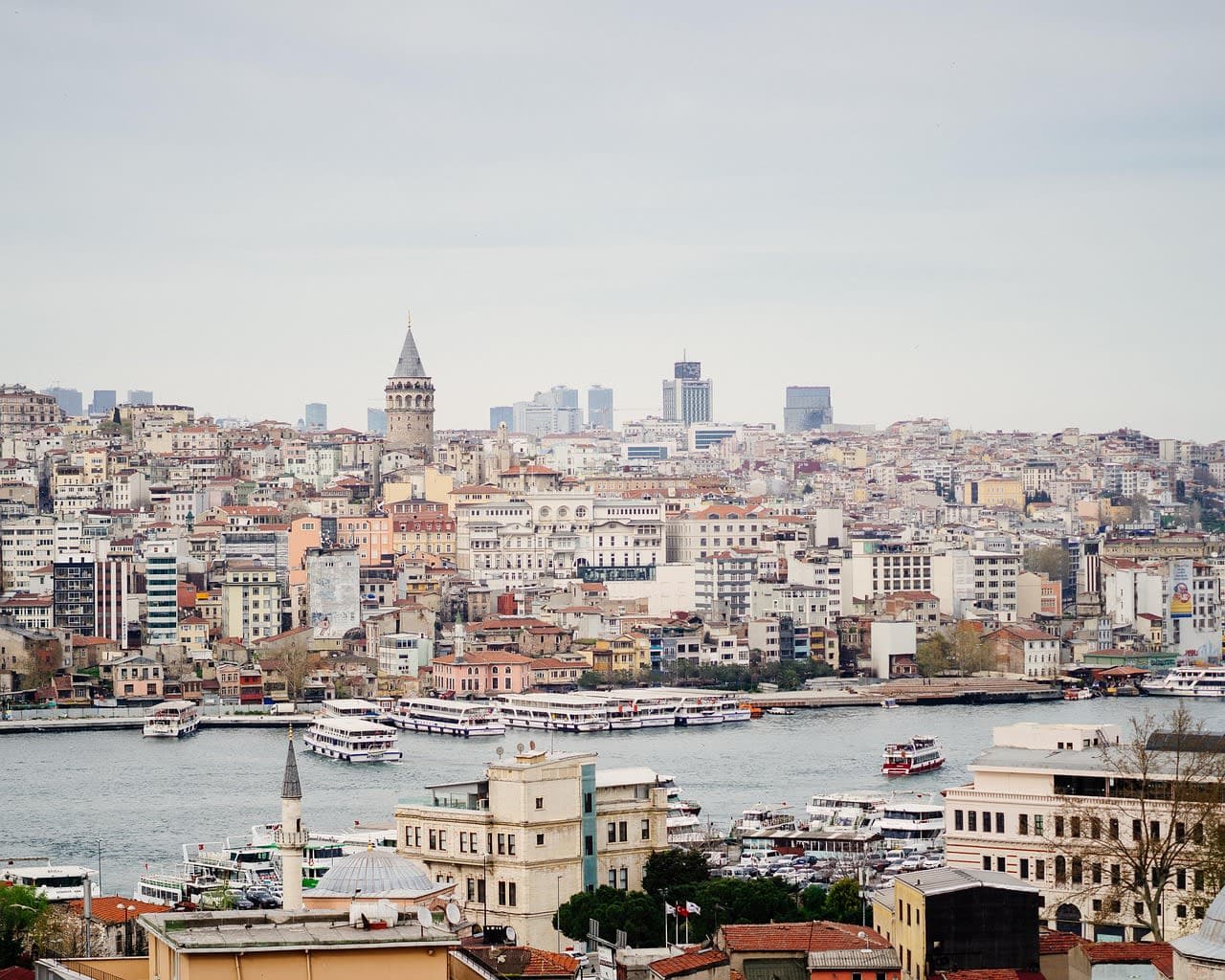
Istanbul's share of visits, at just over a third, reflects a city with year-round demand from business, shopping, medical and cultural travel, rather than a single summer peak. That tends to suit buyers weighing furnished rentals in central districts, but the regulatory side matters: short-term rental rules, permits and building-level restrictions need checking before purchase, not after.
The coast
Antalya's lead in August illustrates how concentrated coastal demand is in a few summer months. A resort apartment can look very different on a July calendar than on a January one. Anyone modelling yield should use a full-year view, include management and maintenance fees, and be sceptical of projections built on peak weeks alone.
Currency and costs
Rising per-night spending in dollar terms is partly a story about prices keeping pace with domestic inflation. Buyers who earn in dollars or dirhams and hold lira-denominated costs should keep that in mind when comparing headline growth figures. Our recent coverage of Türkiye's inflation and policy rate looks at the same tension from the lending side.
How to use this data
Tourism statistics are a backdrop, not a buy signal. A sensible reading of the latest releases is:
- Demand is stable rather than expanding, with arrivals roughly flat and spending per visitor drifting up.
- The mix of source markets is shifting, with sizeable declines from parts of the Gulf.
- Revenue figures lag arrivals by a quarter, so the third-quarter TurkStat release will give a fuller picture of how the summer went.
- None of this predicts the price or rental income of a particular property.
If you are considering a purchase, the questions that matter are practical: title and zoning, valuation, the building's licence for rental use, and total costs. Multi Mulk supports buyers on property in Türkiye and on due diligence and investor protection, and listings can be browsed under search property.
Buyers who are also weighing the citizenship route should note that programme thresholds and rules change, and that eligibility depends on individual circumstances. Multi Mulk advises on Turkish citizenship by investment, and you can speak to an adviser before committing to any purchase.
Sources
- Travel Daily News — Turkey welcomes 34.83m. foreign visitors through August (29 Sept 2026)
- DOEDA — Turizm İstatistikleri, II. Çeyrek: Nisan-Haziran, 2026 (TurkStat release)
Cover photo: Ben_Kerckx on Pixabay.