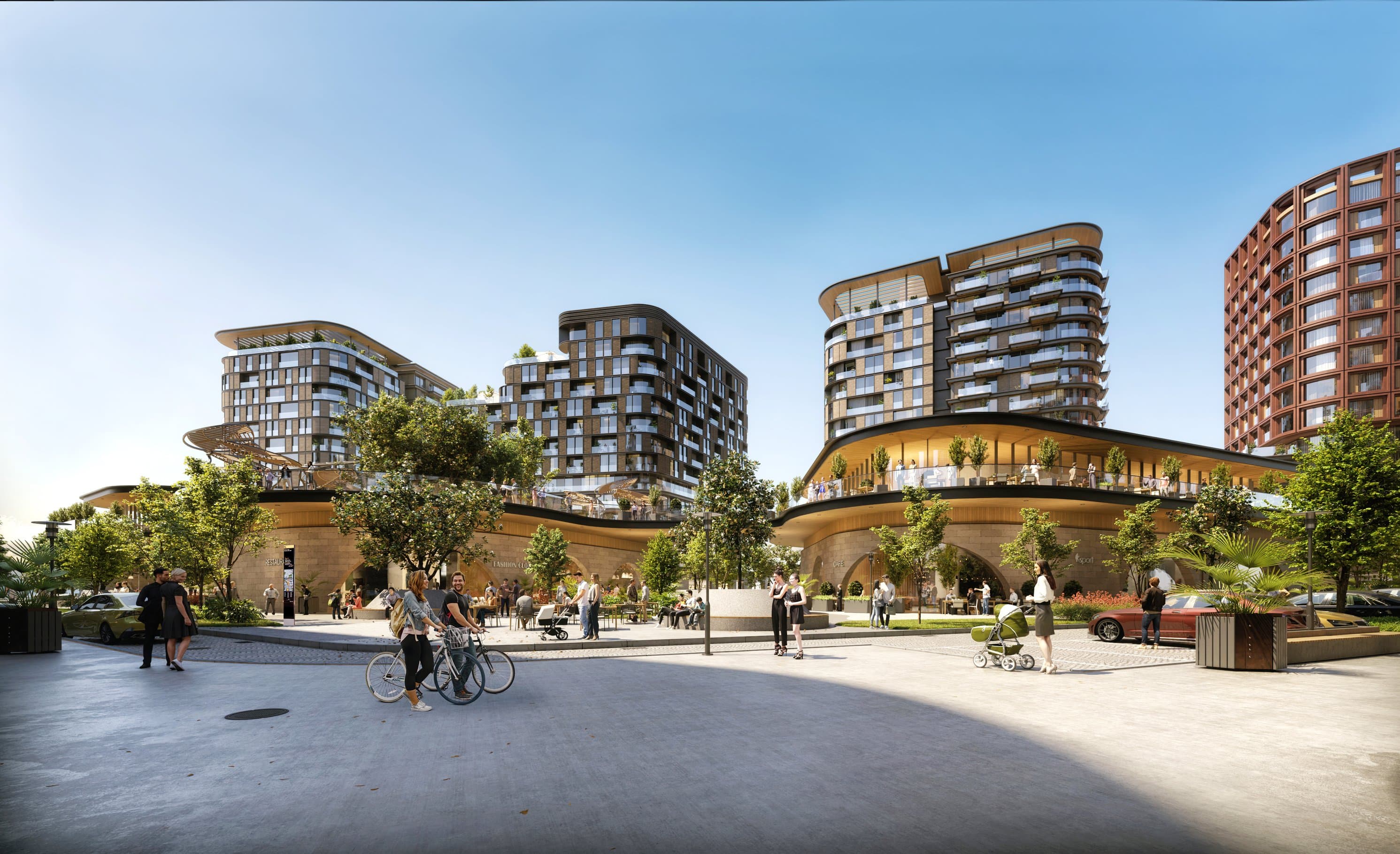
Le quartier
À propos de l’emplacement
Location & Strategic Importance
Eyüpsultan is one of Istanbul’s most geographically diverse European-side districts, combining historic Golden Horn neighborhoods, modern residential developments, major transportation corridors, urban transformation areas, and premium green-lifestyle communities.
Located on Istanbul’s European side, Eyüpsultan extends northward from the Golden Horn toward the Black Sea and northern forest belt. Its southern urban areas connect with Fatih, Bayrampaşa, Gaziosmanpaşa, and Kağıthane, while its northern neighborhoods extend through Göktürk and Kemerburgaz toward Istanbul Airport and the Northern Marmara Motorway.
From a real-estate perspective, Eyüpsultan’s strategic value comes from connecting central Istanbul’s historic residential areas with the emerging northern premium housing corridor. Its investment appeal combines M7 and T5 transportation connectivity, M11 airport accessibility, modern residential compounds, urban regeneration opportunities, and established cultural attractions along the Golden Horn.
Major Neighborhoods & Areas
Eyüpsultan contains several distinct residential micro-markets, including Göktürk, Kemerburgaz, Mithatpaşa, Alibeyköy, Çırçır, Akşemsettin, Yeşilpınar, Rami, Topçular, İslambey, and Düğmeciler.
From a real-estate perspective, the key areas are Göktürk–Kemerburgaz, Alibeyköy–5.Levent, Çırçır–Yeşilpınar, Rami–Topçular, and the historic Eyüp residential neighborhoods.
Göktürk
Eyüpsultan’s principal premium residential market, characterized by modern compounds, villas, green surroundings, and family-oriented housing. Its investment appeal is supported by M11 airport metro connectivity, modern residential quality, international family demand, and proximity to Istanbul’s northern natural environments.
Kemerburgaz–Mithatpaşa
A developing premium residential corridor featuring relatively low-density housing, modern developments, and access to northern transportation infrastructure. Its investment potential is supported by newer residential projects, airport accessibility, and demand for spacious family-oriented living.
Çırçır–Akşemsettin–Yeşilpınar
Established residential neighborhoods supported by M7 metro connectivity and everyday urban infrastructure. Their investment appeal is centered on comparatively accessible housing, local rental demand, and opportunities arising from urban transformation.
Rami–Topçular
A centrally positioned residential and regeneration area known for established housing, local commercial activity, and proximity to Rami Library. Its investment potential comes from neighborhood renewal, cultural infrastructure, transportation connections, and demand for centrally located housing.
Eyüp Merkez–İslambey–Düğmeciler
Historic residential neighborhoods near the Golden Horn, characterized by traditional urban environments, cultural landmarks, established communities, and selective redevelopment opportunities. Their appeal combines historical significance, central accessibility, and local housing demand.
Alibeyköy–5.Levent: An important modern residential and transportation corridor benefiting from the M7 metro and T5 tram interchange. The area features established housing, newer residential compounds, and redevelopment opportunities, appealing to investors prioritizing connectivity, rental demand, and residential liquidity.
Over the last five years, development has increasingly focused on urban regeneration, earthquake resilience, modern residential construction, and transportation expansion. Major initiatives include Eyüpsultan Municipality’s transformation planning across 12 neighborhoods, covering approximately 10 million m² and affecting around 250,000 residents, alongside new housing developments in Göktürk–Kemerburgaz and public-space improvements in Kemerburgaz.
Transportation & Connectivity
Eyüpsultan benefits from a combination of metro, tram, airport rail, major highways, and northern motorway infrastructure, connecting its historic urban center with Istanbul’s central business districts and northern residential areas.
The M7 metro serves Alibeyköy, Çırçır, Veysel Karani–Akşemsettin, and Yeşilpınar, providing connections toward Kağıthane, Mecidiyeköy, and western Istanbul. The T5 Eminönü–Alibeyköy tram runs along the Golden Horn, connecting Eyüpsultan with Feshane, Silahtarağa, Alibeyköy, and the historic peninsula.
The M11 airport metro serves Göktürk and Kemerburgaz, providing direct rail access to Istanbul Airport and connections with the wider metropolitan network. Northern road connectivity is supported by the Northern Marmara Motorway and Yavuz Sultan Selim Bridge corridor.
Future transportation proposals include the Seyrantepe–Alibeyköy metro and Vezneciler–Sultangazi metro, which may further improve connectivity between central Eyüpsultan, Maslak, and the historic peninsula. These remain planned projects in the September 2026 source report rather than operating services.
Schools & Education
Eyüpsultan offers an established network of public and private schools, kindergartens, vocational institutions, and educational facilities serving its diverse residential population.
Premium residential neighborhoods such as Göktürk and Kemerburgaz provide access to private colleges and family-oriented educational facilities, while central areas such as Alibeyköy, Rami, and Yeşilpınar offer established public and private schooling options.
The district also benefits from access to higher education institutions across neighboring Kağıthane, Şişli, Fatih, and northern Istanbul. Its modern residential communities, family-oriented housing, and transportation connections support long-term demand for educational services.
Hospitals & Healthcare
Eyüpsultan provides public and private healthcare services, including Eyüpsultan State Hospital, family health centers, medical clinics, and specialist outpatient facilities.
Central residential neighborhoods benefit from established healthcare infrastructure, while Göktürk and Kemerburgaz offer access to local medical services and additional healthcare institutions in the wider northern Istanbul corridor.
The district’s transportation network also connects residents with major hospitals in neighboring Kağıthane, Şişli, and central Istanbul, supporting healthcare accessibility for families, professionals, and international residents.
Shopping & Lifestyle
Eyüpsultan is a diverse residential and lifestyle destination, combining historic attractions, cultural institutions, modern shopping facilities, entertainment, and premium green residential environments.
Major attractions include Eyüp Sultan Mosque, Pierre Loti Hill, Feshane, and Rami Library, which has become an important cultural and educational destination. The Golden Horn waterfront offers recreational spaces, walking routes, cultural venues, and historical attractions.
Vialand provides shopping and entertainment facilities within the district, while Göktürk and Kemerburgaz offer restaurants, cafés, neighborhood retail, and access to forest recreation and outdoor activities.
Göktürk is particularly associated with modern residential compounds, landscaped areas, and premium family living. Central Eyüpsultan offers a more traditional urban lifestyle, with established shopping streets, markets, public transportation, and cultural infrastructure.
Regard sur le marché
Performance du marché résidentiel
From an investment standpoint, Eyüpsultan can be positioned as a diversified residential market combining premium northern housing, transport-led urban development, and historic Golden Horn regeneration opportunities. Its value proposition is built around improved metropolitan connectivity, airport accessibility, growing demand for modern family housing, cultural infrastructure, and the redevelopment of older residential buildings. Different micro-markets serve different investment strategies: Göktürk for premium lifestyle and long-term capital preservation; Kemerburgaz for newer housing and airport-related accessibility; Alibeyköy–5.Levent for rental demand and transport connectivity; Çırçır–Yeşilpınar for accessible entry prices and urban transformation; and Rami–historic Eyüp for regeneration, local demand, and cultural advantages. The district’s registered population increased from approximately 383,909 in 2018 to 425,216 in 2025, supporting an expanding residential demand base. However, development characteristics vary significantly between northern low-density communities and central urban neighborhoods. Investment performance is influenced by building quality, metro accessibility, planning regulations, redevelopment progress, surrounding infrastructure, and competing residential supply. The availability of land and development opportunities in some northern areas also means that residential scarcity differs substantially across the municipality.
PAST
Strong Capital Appreciation
Eyüpsultan has demonstrated substantial long-term nominal residential price growth, supported by transportation expansion, urban transformation, modern residential development, and increased accessibility to Istanbul Airport.
Historical Sahibindex/BETAM data placed residential asking prices at approximately TRY 9,803/m² in December 2021.
Compared with Multi Mulk’s revised September 2026 pricing range of TRY 125,000–325,000/m², this represents an implied nominal increase of approximately 1,175%–3,215% over nearly five years.
The analysis also compares September 2026 pricing with a February 2023 Endeksa benchmark of approximately TRY 29,682/m², indicating an implied nominal increase of approximately 321%–995%.
For the one-year period, Multi Mulk’s revised pricing implies approximately 110%–447% nominal repricing compared with an inferred earlier benchmark, while the revised rental assumptions imply approximately 53%–109% growth.
These calculations compare historical external market references with Multi Mulk September 2026 estimates.
They do not represent a continuous transaction-price index, inflation-adjusted appreciation, or verified USD investment returns.
CURRENT
Diverse Residential Market & Rental Potential
As of September 2026, Multi Mulk’s model places Eyüpsultan residential prices at approximately $2,500–6,500/m², with a representative 100 m² property valued between $250,000 and $650,000, using an exchange-rate assumption of TRY 50 per USD.
Average monthly rental assumptions range from TRY 55,000 to TRY 75,000 (approximately $1,100–1,500), producing a modeled gross rental yield of approximately 2.03%–7.20%, with a midpoint of 3.47% and an estimated 28.8-year gross amortization period before expenses.
Residential pricing varies considerably across neighborhoods.
Göktürk is modeled at $4,500–6,500/m²; Kemerburgaz–Mithatpaşa at $3,000–4,500/m²; Alibeyköy at $2,500–4,500/m²; Çırçır at $2,500–3,000/m²; and Rami Yeni at $2,000–3,000/m².
The rental market also reflects different investment characteristics.
Göktürk and Kemerburgaz primarily appeal to premium family and executive tenants, while Alibeyköy benefits from transportation connectivity and established rental demand.
Rami and other central neighborhoods may offer comparatively accessible entry prices and income-oriented opportunities.
These figures are Multi Mulk estimates rather than verified district-wide transaction averages.
Actual property values and rental returns depend on neighborhood characteristics, construction quality, achievable rent, occupancy, and ownership expenses.
FUTURE
Positive Infrastructure & Regeneration-Led Growth Outlook
Eyüpsultan’s medium-term residential outlook is supported by its established M7 and T5 transportation networks, M11 airport accessibility, continued urban transformation, and demand for modern housing in Göktürk and Kemerburgaz.
The northern residential corridor may benefit from existing airport connections and modern residential development, while central neighborhoods such as Alibeyköy, Çırçır, and Rami may gain from redevelopment initiatives and potential future metro expansion.
The proposed Seyrantepe–Alibeyköy and Vezneciler–Sultangazi metro projects, together with cultural investments around Rami Library and the Golden Horn, represent possible long-term improvements in accessibility and neighborhood attractiveness.
Multi Mulk’s model includes an illustrative 20%–25% potential infrastructure-related uplift scenario for properties directly benefiting from improved transportation access.
Under this scenario, the district’s $2,500–6,500/m² reference range would increase to approximately $3,000–8,125/m², depending on the assumed uplift.
This is a Multi Mulk sensitivity scenario, not an independently verified price forecast.
Future performance depends on infrastructure delivery, redevelopment execution, property quality, competing housing supply, financing conditions, and actual market demand.
Investment Insight: Eyüpsultan combines premium northern residential communities, airport connectivity, established central housing demand, and significant urban transformation opportunities.
Göktürk–Kemerburgaz offers modern family housing and lifestyle-oriented investment potential, while Alibeyköy, Çırçır, and Rami provide opportunities centered on transportation, rental demand, and regeneration.
These characteristics support Eyüpsultan’s position as one of Istanbul’s diversified residential investment markets, where careful neighborhood selection, structural quality, and realistic pricing are essential for long-term investment performance.
Sources Reference institutions identified for verification include Endeksa for residential market benchmarks, Metro İstanbul for transportation infrastructure, and Eyüpsultan Municipality for municipal development and facilities.
Market-data note: The September 2026 residential price ranges, rental assumptions, and potential 20%–25% uplift scenarios are Multi Mulk estimates. Historical performance figures use separate external references and should not be interpreted as guaranteed USD returns or continuous observed market-price growth.