
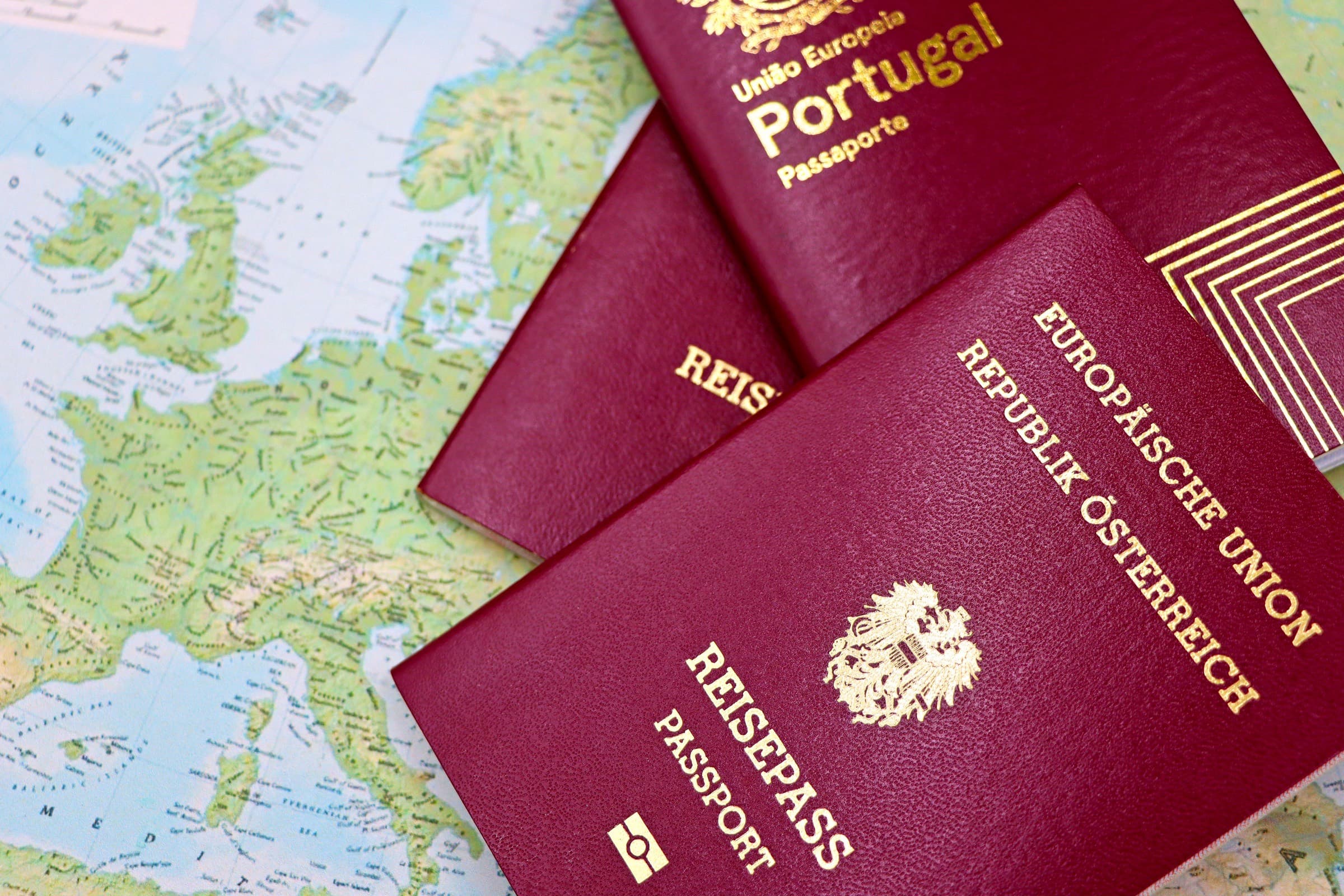
What a second passport is, and what it is not
A second passport is a second nationality: the right to live, work and travel as a citizen of another country, held alongside the citizenship you were born with. It is not a residence permit, however long that permit runs, and it is not a visa. A residence card can be withdrawn when its basis changes; a citizenship, once granted, is yours and passes to your children.
Two regions offer an additional passport to investors on terms that are clear, lawful and reasonably fast. Türkiye grants citizenship on a real estate investment of US$400,000 held for three years, with a realistic estimate of three to six months from the certificate of conformity. The five Caribbean programmes — Grenada, Dominica, St Kitts & Nevis, Saint Lucia and Antigua & Barbuda — grant citizenship on a contribution to a government fund or an approved real estate purchase, with processing measured in months. All of them include the spouse and dependent children; none requires the investor to live there.
Whether you can hold a second nationality at all is a question of your first. Most countries permit dual citizenship; some restrict it, and a handful prohibit it. That is the first question in every eligibility review we run, because no investment route can answer it.
Türkiye and the Caribbean
Who this is for
Investors and families who need options, not promises
A second passport solves different problems for different people. The programme that fits depends on which of these describes you.
- 01
Families securing a second base
Parents who want their children to hold a second nationality by descent, with the right to live, study and work in a second country whatever happens in the first. Both regions include the spouse and children under 18; the Caribbean programmes extend to dependent adult children and parents.
- 02
Business travellers who need mobility
Executives and founders whose current passport requires a visa for markets they visit routinely. A Turkish passport reaches 110 or more destinations visa-free or on arrival and unlocks the US E-2 treaty investor visa; the Caribbean passports reach 140 to 155, including the Schengen area and the United Kingdom.
- 03
Investors who want an asset behind the passport
Those who would rather hold a property in a large, liquid market than make a non-refundable contribution. Türkiye's route is a property purchase that can be let during the three-year hold and sold after it, with the citizenship retained.
- 04
Residents of countries where dual nationality is lawful
Eligibility begins at home. Where your country permits a second nationality, the investment routes are open to you; where it restricts one, the review has to establish what is possible before anything else is discussed.
How the path is structured
From eligibility review to passport, in five stages
Every file we run follows the same sequence, and the first stage is the one that decides whether there should be a second.
- 01
Written eligibility review
Your nationality and its position on dual citizenship, your family composition, your source of funds, and anything relevant to a security review. A written assessment tells you which programmes are open to you and which are not, before you spend anything.
- 02
Programme selection
Türkiye or the Caribbean, real estate or contribution, and which country within the Caribbean — decided on what you need the passport to do, the capital you want to commit, and whether you want an asset at the end of it. We compare the programmes on the same figures we publish.
- 03
Investment and due diligence
For a real estate route, a licensed valuation, a title and seller check, a developer check for an off-plan purchase, and a payment plan that satisfies the receiving authority. For a contribution route, the approved channel and the receipt trail. The same standard we set out on our investor protection page.
- 04
Application
Licensed counsel in the relevant jurisdiction files each step under a power of attorney, with a family document set we prepare and check against the current list. You attend once for biometrics; otherwise you are not required to travel.
- 05
Passport, and after
Civil registration, identity documents and the passport itself for each family member. Then rental management for a property route, and resale planning when the holding period ends. The relationship does not close on approval day.
The citizenship programmes, side by side
Every figure below is read from the programme records we maintain, not written into this page, so it cannot disagree with the programme's own page. The full comparison, with every route, is on the compare page.
| Critère | Türkiye Citizenship by Investment | Grenada Citizenship by Investment | Dominica Citizenship by Investment | St Kitts and Nevis Citizenship by Investment |
|---|---|---|---|---|
| Investissement minimum | 400 000 $US | 270 000 $US | 200 000 $US — Le plus favorable | 325 000 $US |
| Durée de détention | 3 ans — Le plus favorable | 5 ans | 5 ans | 5 ans |
| Rendement locatif brut | 5–7% — Le plus favorable | 2–4% | 2–4% | 2–4% |
| Capital restitué à la sortie | Oui — Le plus favorable | Oui — Le plus favorable | Oui — Le plus favorable | Oui — Le plus favorable |
| Marché de revente | Marché ouvert — Le plus favorable | Acheteurs du programme ou conditions de l’instrument | Acheteurs du programme ou conditions de l’instrument | Acheteurs du programme ou conditions de l’instrument |
| Rendement indicatif sur 5 ans (ROI) | +25–35% · 100 000 $US–140 000 $US de revenus — Le plus favorable | +10–20% · 27 000 $US–54 000 $US de revenus | +10–20% · 20 000 $US–40 000 $US de revenus | +10–20% · 32 500 $US–65 000 $US de revenus |
| Délai de traitement | 3–6 mois — Le plus favorable | 4–6 mois | 4–6 mois | 6–8 mois |
| Destinations sans visa | 110 | 140 | 140 | 155 — Le plus favorable |
| Accès à l’espace Schengen | Non | Oui | Oui | Oui |
| Double nationalité autorisée | Oui | Oui | Oui | Oui |
| Présence requise dans le pays | Aucune — Le plus favorable | Aucune — Le plus favorable | Aucune — Le plus favorable | Aucune — Le plus favorable |
| Visite requise | Non | Non | Non | Non |
| Enfants à charge jusqu’à | 18 ans | 30 ans — Le plus favorable | 30 ans — Le plus favorable | 30 ans — Le plus favorable |
| Parents pouvant être inclus | Non | Oui | Oui | Oui |
| Citoyenneté après | Accordée directement — Le plus favorable | Accordée directement — Le plus favorable | Accordée directement — Le plus favorable | Accordée directement — Le plus favorable |
| Impose les revenus mondiaux | Oui | Non | Non | Non |
Read before you decide
Türkiye14 mai 2026
Looking for a second passport: which program is right for you in 2026?
Türkiye18 mai 2026
How to choose between Residency vs Second Citizenship?
Türkiye27 avril 2026
Turkey Citizenship vs Caribbean Citizenship by Investment

Citoyenneté22 septembre 2026
Turkey Citizenship vs UAE Golden Visa in 2026
Second passport questions, answered
Yes, where both countries permit it. Türkiye and every Caribbean programme country allow dual citizenship. Whether your current country does is the first question in the eligibility review; most permit it, some restrict it, and a few prohibit it.
A second passport is a nationality: permanent, inheritable, with a passport of its own. A golden visa is a residence permit granted on an investment; it can be long and renewable, as the UAE's ten-year permit is, but it remains a permit tied to its basis, and it does not lead to a passport.
Türkiye and the Caribbean programmes are all measured in months. A realistic estimate for Türkiye is three to six months from the certificate of conformity; the Caribbean programmes range from three to twelve months depending on the country. In every case a clean file is what keeps the timeline inside the estimate.
Yes. Türkiye includes the spouse and children under 18 on the same application. The Caribbean programmes include the spouse, dependent children — in most cases to a higher age where they are in full-time education — and, in several programmes, dependent parents.
No. Neither Türkiye nor the Caribbean programmes require residence. Antigua & Barbuda asks for five days in the country within the first five years; the others ask for none.
Not by itself. Tax residency depends on where you live, not on which passports you hold. Owning a property abroad creates a tax position on that property's income and eventual sale. We coordinate with your tax adviser rather than pretend the question does not exist.
Find out which programmes you are eligible for
Send us your nationality, your family composition and the capital you are considering, and we will return a written eligibility assessment within two working days, covering every programme we advise on.